The Real Process Behind a High-Rise Repaint
Painting a high-rise building involves the same main steps as any repaint: preparation, priming, and coating. The main difference is how the crew reaches the surface. The access method, whether it’s rope access, scaffolding, or an elevated work platform, affects nearly every part of the job, from cost and timeline to safety requirements and how much residents and tenants are disrupted.
Key takeaways
- The access method (rope access, scaffolding or an EWP) is usually the biggest factor in cost, timeline and disruption, not the paint itself.
- Queensland WHS law treats any fall risk over two metres as high-risk construction work, which means a Safe Work Method Statement (SWMS) is mandatory.
- A well-run high-rise job is planned around the people living or working in the building, not just the building itself.
- Access planning, safety documentation, and communication with residents separate a properly run job from a risky one.
Painting the wall is the easy part
A high-rise repaint typically includes the building’s exterior surfaces, such as render, cladding, balcony fronts, window surrounds, fire stairs, and sometimes signage or common area exteriors. Cleaning, patching, priming, and coating are much the same as for a lower-rise commercial building.
What’s different is everything around the painting itself. Getting to a tenth-floor balcony safely is a much bigger challenge than reaching a ground-floor shopfront, and this shapes nearly every decision a contractor makes before painting begins.
Ropes, scaffolding or an EWP: how crews actually reach the building
Most high-rise jobs use one of three access methods, and each suits a different kind of building.
- Rope access involves technicians using ropes and harnesses to move down or across the building’s facade. This method takes up little space, sets up quickly, and keeps driveways, pools, and car parks open during the job. It’s especially good for tall, uniform towers where scaffolding would take too long or cost too much.
- Scaffolding creates a sturdy platform around the building. It’s best for jobs that need major repairs, take a long time, or involve several trades working at height together. The downside is that scaffolding takes longer to put up and take down, and it can block entrances, light, and views for weeks.
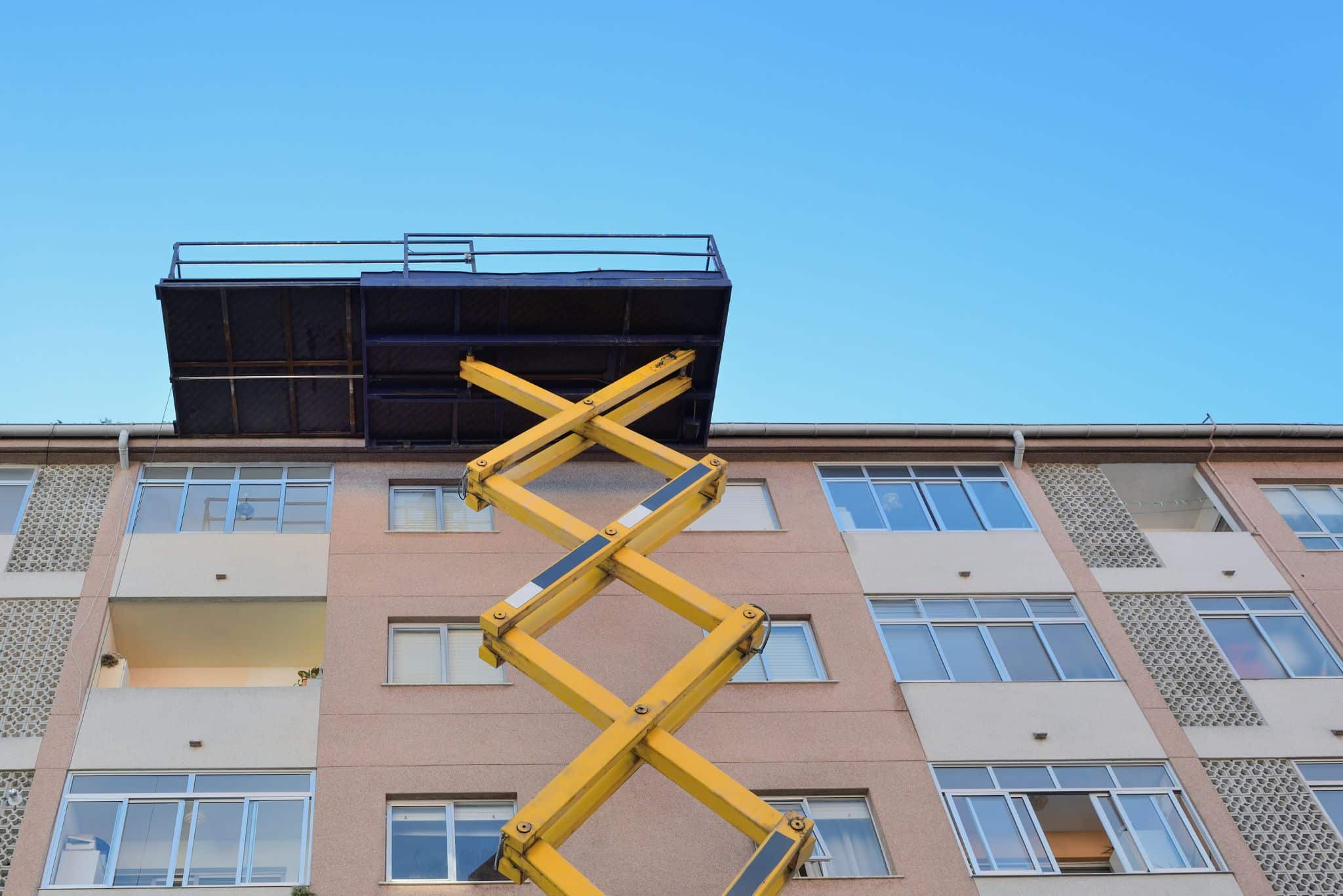
- Elevated work platforms (EWPs), like boom lifts and cherry pickers, are a good choice when there is clear, flat ground around the building. They work well for lower or mid-rise areas but can’t be used where fences, pools, gardens, or narrow roads get in the way.
Many high-rise projects use more than one method. For example, rope access might be used for the main tower, while an EWP is used for a lower podium. The method is chosen based on what each part of the building requires.
The two-metre rule most people don’t know about
Working at height on a high-rise is not only risky but also strictly regulated. In Queensland, WHS law says that any construction work where someone could fall more than two metres is considered high-risk, so the business must have a Safe Work Method Statement (SWMS), as WorkSafe Queensland confirms.
For a high-rise repaint, this isn't just paperwork; it’s what separates a compliant contractor from one who cuts corners.
Keeping residents on-site while the work is underway
A high-rise repaint affects people’s homes and workplaces for weeks, so planning to reduce disruption is just as important as the painting itself. This usually involves:
- Scheduling noisy or intrusive work around residents’ and tenants’ routines where possible
- Giving clear notice before work affects specific floors, balconies or common areas
- Protecting entries, pools, gardens and car parks from overspray and debris
- Securing the site properly at the end of each day, especially with rope or scaffold access in place
- Keeping a single point of contact for the body corporate or facility manager throughout the job
Committees and managers often handle resident questions, so a contractor who communicates clearly makes their job much easier.
Get a painter who's actually done this before
A high-rise repaint is a big decision that most body corporates only face every ten years or so. This means the contractor’s experience with height access and compliance is just as important as their painting skills.
At Kraudelt Painting, we've worked on high-rise unit complexes, commercial buildings, and hotels and resorts across Brisbane and the Gold Coast, and we build planning and communication into every quote before work begins. You can read more about our approach on our high-rise painters page, or call us on 0423 018 747 to talk through your building.
