Your Practical Guide to Commercial Painting Safety & Compliance in Brisbane
Safety and compliance are essential for any commercial repaint in Brisbane. With WHS laws, QBCC licensing, and environmental rules in place, you need to make sure your contractor meets all requirements. This guide will help you check that easily.
What you need to know
- Start by checking licences and insurance. Your painter should have the right QBCC Painting and Decorating licence, as well as current public liability and workers’ compensation insurance.
- Look for a clear WHS approach. For commercial painting, which often counts as construction work, you should see risk assessments, site inductions, and Safe Work Method Statements (SWMS) for any high-risk tasks.
- Hazardous chemicals, spray work, and lead need strict control. Products, ventilation, PPE, and clean-up should follow the Work Health and Safety Regulation 2011, relevant Codes of Practice, and WorkSafe Queensland guidance.
- Waste and wash-up are regulated. Paint waste, wash water, and solvents must be managed in accordance with the Environmental Protection Act 1994, the Waste Reduction and Recycling laws, and Brisbane City Council's hazardous waste rules.
- Choosing a safety-focused contractor makes your job easier. A properly accredited, CM3-certified team like Kraudelt Painting already has the right systems, documents, and training, so you won’t be left chasing paperwork at the last minute.

Why safety and compliance matter on commercial painting projects
On commercial and strata sites in Brisbane, repainting is more than just applying paint. The work often happens at heights, involves chemicals, and takes place near staff, tenants, and the public. If something goes wrong, it can result in injuries to workers, tenants, or visitors.
- WHS investigations and possible enforcement action
- environmental incidents (e.g. paint in stormwater)
- delays, rework and reputational damage.
Under Queensland’s Work Health and Safety Act 2011 and Work Health and Safety Regulation 2011, the person conducting a business or undertaking (PCBU), which can include building owners, managers and principal contractors, must ensure, so far as is reasonably practicable, the health and safety of workers and others affected by the work.
Choosing a contractor with strong systems and the right accreditations greatly lowers your compliance risks.
1. Licensing, registration and insurance
Begin with the basics. If your painter can’t meet these requirements, nothing else matters.
QBCC licence
In Queensland, painting work over $3,300 requires a QBCC Painting and Decorating licence.
For your due diligence:
- Ask for the QBCC licence number and check it against the QBCC online licence search.
- Confirm the licence class, status (current, not suspended), and any conditions.
Insurance requirements
A professional commercial painter should provide:
- Public liability insurance
- Workers’ compensation insurance for their employees
- Evidence of any additional project-specific insurance, if required by your contract.
2.WHS duties and site safety planning
On a commercial or strata project, you often have several duty holders, such as the building owner, facility manager, principal contractor, and subcontractors. Everyone has responsibilities under WHS laws.
WHS management and SWMS
On construction projects, the principal contractor must prepare a WHS management plan. For high-risk construction work, such as working at heights, near traffic, or with certain equipment, the responsible PCBU must also prepare a Safe Work Method Statement (SWMS).
A good commercial painter will:
- prepare task-specific SWMS for painting at heights, spray application, use of elevated work platforms, etc.
- carry out site-specific risk assessments instead of relying on generic documents
- participate in site inductions and toolbox talks
- keep SWMS available on site and review them as conditions change.
If a contractor cannot show you their WHS documentation, that is a red flag.
Site controls you should expect
On a live commercial site, there should be:
- clear exclusion zones and barriers
- signage such as “Wet Paint” and pedestrian redirection
- safe access and egress for building users
- coordination with other trades to avoid clashes and crowded areas
- end-of-day checks to leave the site safe and tidy.
These controls help protect your staff, tenants, customers, the general public, and the contractor's team.
3. Managing high-risk tasks: heights, access and spray work
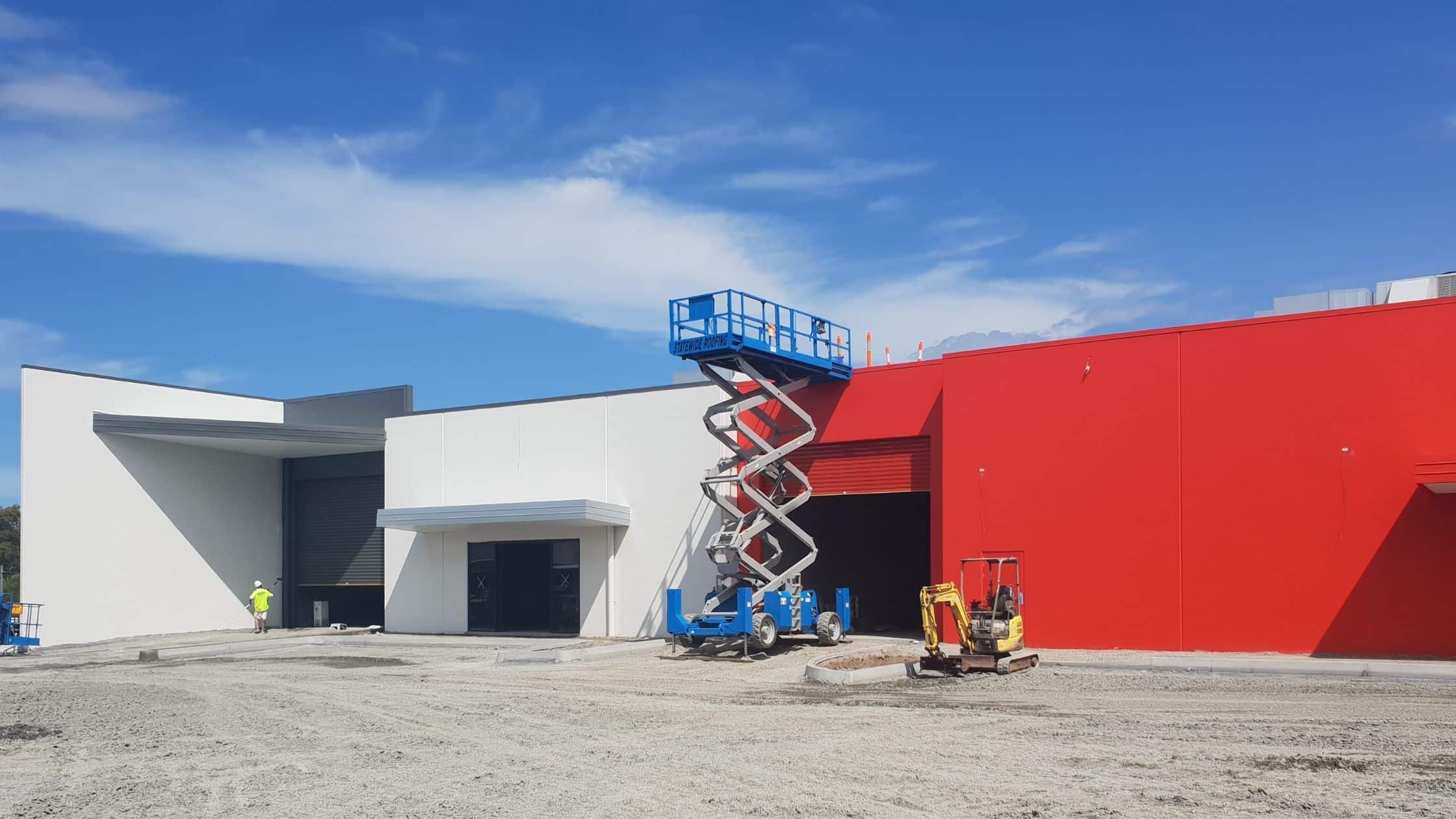
Commercial painting often involves working at heights, on scaffolds, boom lifts, or swing stages. Spray painting also brings its own health risks.
Working at heights and access equipment
Under WHS laws and Codes of Practice, PCBUs must manage the risk of falls, including from ladders, scaffolds and elevated work platforms.
For your checklist:
- Does the contractor use properly erected and inspected scaffolding or EWP, rather than stretching off ladders?
- Are operators of boom lifts or other plant appropriately trained and ticketed?
- Are fall-prevention systems (guardrails, work positioning, harnesses where appropriate) in place and used correctly?
Spray painting and hazardous atmospheres
Spray application is efficient, but it increases the risk of exposure to airborne contaminants and flammable vapours. The Spray Painting and Powder Coating Code of Practice and WorkSafe Queensland guidance explain the requirements for ventilation, PPE, and ignition control.
You should see:
- appropriate respiratory protection and PPE
- adequate ventilation or extraction for internal works
- controls around ignition sources for flammable products
- consideration of overspray to protect vehicles, neighbouring properties and the public.
4. Hazardous chemicals, lead and air quality
Paints, solvents, fillers, and coatings can be classified as hazardous chemicals under the WHS Regulation. PCBUs must manage risks, keep safety data sheets (SDS), and make sure everything is labelled and stored correctly.
Hazardous chemicals
A compliant contractor will:
- keep an up-to-date chemical register and SDS on site.
- ensure all containers are correctly labelled
- train workers in handling, first aid and spill response
- minimise use of high-VOC or hazardous products where possible.
Lead-based paint
Older commercial buildings may have lead-based paint, especially on exterior joinery and steelwork. WorkSafe Queensland gives specific guidance on testing, safe removal, and housekeeping to control exposure.
If lead is suspected:
- Testing should be carried out before aggressive surface prep.
- Methods like wet scraping and chemical stripping are preferred over dry sanding.
- Dust control, personal hygiene and waste handling requirements become more stringent.
5. Environmental compliance: waste, wash-up and overspray
In Queensland, environmental rules are set by the Environmental Protection Act 1994 and related waste laws. These require businesses to prevent environmental harm and manage regulated waste properly.
For painting projects, this typically means:
- No paint, wash water or solvents into stormwater drains
- using contained wash-up systems or bunded areas
- segregating and disposing of waste paint and solvents as hazardous or regulated waste where applicable
- managing overspray to prevent property damage or contamination.
The Brisbane City Council offers specific guidance and facilities for hazardous waste disposal, including leftover paint.
A responsible contractor will:
- explain how they’ll manage the wash-up on your site
- Keep spill kits on hand.
- clean up thoroughly at the end of each shift
6. Documentation you should expect from a compliant commercial painter
For your records, and to satisfy auditors, boards, and insurers, it is a good idea to ask for a basic documentation pack:
Before work starts:
- Copy of QBCC licence and insurance
- Site-specific WHS documentation – risk assessments, SWMS, any project WHS plan
- Programme/schedule showing how disruption will be minimised
- Details of products and systems to be used (brand, system warranties where relevant).
During and after work:
- Records of site inductions and toolbox talks (if you’re the principal contractor)
- Sign-off or completion report, including areas painted and products used
- Any relevant maintenance guidance to help you preserve the finish and warranties.
How we handle Commercial Painting Safety and Compliance at Kraudelt Painting
As a family-run Brisbane business, we understand you are not just buying paint; you are buying peace of mind.
For our commercial and strata clients, we:
- maintain current QBCC licensing, insurance and CM3 certification
- undertake annual audits of our safety systems, hazardous goods management, scaffolding and heights procedures, and first aid readiness
- prepare site-specific SWMS and risk assessments for every commercial project
- Use quality products, eco-friendly options where suitable, and follow all manufacturer and regulatory guidelines.
- work to your schedule, including nights and weekends, to reduce disruption to your business.
When you partner with us, you do not have to juggle multiple trades, chase documents, or worry about whether boxes have been ticked. We handle the details so you can focus on running your site.
Ready to scope a compliant commercial painting project in Brisbane?
If you are planning a repaint for your Brisbane commercial, strata, retail, or industrial property and want to ensure safety and compliance are covered, we would love to help.
Request a fast, fixed-price quote from Kraudelt Painting today and let us create a commercial painting solution that protects your people, your property, and your reputation.
