What You Need to Know Before Painting Over Old Paint in Brisbane
Yes, you can paint over old paint — but only if the surface underneath is properly prepared. Skipping prep is the most common reason DIY repaints fail, resulting in peeling, blistering, and uneven colour within months.
In this guide, the team at Kraudelt Painting covers everything you need to check before you open a paint tin — from surface condition and stain removal to water damage and colour changes — so your finished result lasts.
What Condition Does Old Paint Need to Be In Before Repainting?
If your current paintwork is looking a little worse for wear, you will need to do a bit of prep work before you crack open the paint tin. Here are a few specifics.
How To Remove Marks and Stains
Scuff, marks, dust, dirt, and stains are all extremely common on interior walls. It’s vital to remove any of these imperfections as best you can before you apply a fresh coat of paint. Why? Because dirt can prevent paint from properly adhering to your surface, resulting in peeling and blistering further down the track. What’s more, stains can show up underneath light-coloured paint.
So, to prevent marks and stains from ruining your hard work, complete the following:
- Wash walls thoroughly to remove surface dust and dirt – even if your walls look completely clean.
- Remove any stubborn stains with sugar soap, warm water and detergent, or another cleaning solution.
- Allow the wall to dry completely before you paint.
Can You Paint Over Peeling or Flaking Paint?
You cannot paint directly over the top of peeling or blistered paint. Instead, you’ll need to remove flaking paint with a palette knife or similar tool. Then, sand down the area to achieve a smooth finish. Apply a suitable primer before you paint.
 Can You Paint Over Water Stains or Damp Patches?
 Can You Paint Over Water Stains or Damp Patches?
Water damage can be a little trickier to deal with. First, you’ll need to locate and repair the source of the leak – if you don’t do this, your new paint will soon show signs of water damage, too. Plus, covering mould with paint may cause it to spread to other areas of your house.
Once the leak has been repaired, give the area ample time to dry out. Clean the surface as above, and then, prime and paint as normal.
Do You Need to Prime Walls Before Painting Over Old Paint?
Another key consideration to make when asking ‘Can I paint over old paint’ is the condition of your walls. Are they chipped? Are there any holes in the surface? Is my plaster water damaged beyond repair
Little chips and holes can be repaired easily with plaster fillers – these are available at just about any good hardware store. Follow the instructions carefully. Allow to dry before sanding down the surface. Then, prime and paint as normal.
Larger holes may require the help of a contractor. It’s really up to you and what you feel confident repairing yourself.
Do You Need to Prime Walls Before Painting Over Old Paint?
In most cases, yes — and it's one of the steps DIYers most commonly skip.
Primer does two jobs: it seals the surface so your topcoat adheres properly, and it blocks what's underneath from affecting the final colour. Whether you actually need it depends on your situation:
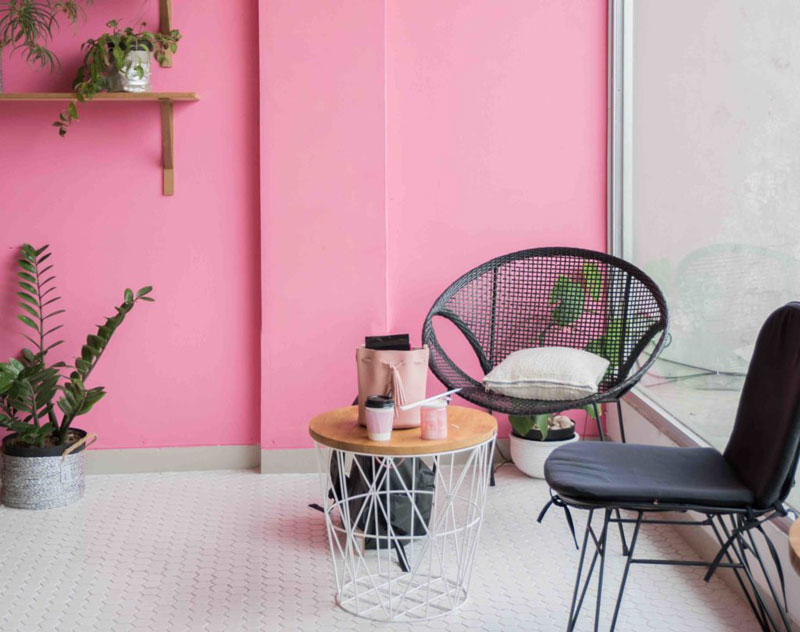 If you're painting a lighter colour over a darker one, a white or block-out primer is essential. Without it, the old colour will bleed through — sometimes requiring three or four topcoats to cover, which adds cost and rarely gives a clean result. A single coat of quality block-out primer solves this in one step.
If your walls have been repaired — filled holes, sanded patches, or areas where you've removed peeling paint — those bare spots must be primed before painting. Unpainted filler absorbs topcoat unevenly and shows up as dull patches once dry.
If you're painting over a sound, same-colour surface in good condition, you may be able to skip primer and go straight to a quality topcoat. This is the exception, not the rule.
For Brisbane homes, where walls are regularly exposed to humidity, UV, and temperature fluctuations, we recommend a quality water-based primer as a baseline for any repaint. Dulux's primer and undercoat range is a good reference for matching primer type to surface.
If you're unsure which primer is right for your surface, our residential painting team in Brisbane can advise before work starts.
When Should You Call a Professional Painter Instead of DIY?
If your walls have more than one of the issues above — peeling paint, water damage, significant surface repairs, and a colour change — the prep work alone can become a full weekend job with no guarantee of a professional finish.
As a rule of thumb, it's worth calling in a professional when:
- Water damage or mould is involved — DIY prep can miss underlying moisture issues that will cause your new paint to fail within months
- The surface requires extensive sanding, priming, or plaster repairs across multiple rooms
- You're making a significant colour change, particularly from dark to light
- The property is a rental or pre-sale repaint where the finish needs to meet a higher standard
Kraudelt Painting has been handling interior and exterior repaints across Logan City, Beenleigh, Springwood, Wynnum, Capalaba, Cleveland, and the Redlands for over 15 years. Whether your walls are blistered, water damaged, or just overdue for a refresh, our team knows exactly how to prep and paint them to a standard that lasts.
If you're in Brisbane Southside, the Scenic Rim, or anywhere across SE QLD — request a free quote or call Craig directly on 0423 018 747.
